 Independent visitor guide to Tay Ninh province

Destinations · Lang Sen wetland
Lang Sen wetland: the Plain of Reeds inside Tay Ninh
Since the merger, the province includes a Ramsar-listed wetland on the Plain of Reeds: lotus lagoons, seasonally flooded grassland and riverine melaleuca forest near the Cambodian border. It is a long drive for a quiet day on the water, and the water level decides whether it is worth it.
At a glance
- Status
- Ramsar site no. 2227, since 22 May 2015
- Area
- 4,802 ha listed; about 5,000 ha natural area
- Time needed
- 4 to 6 hours on site
- From HCMC
- About 140 km
- From Tan An
- About 90 km
- Season
- September to November for high water
Sources: Ramsar Sites Information Service — Lang Sen Wetland Reserve; Bao Tay Ninh — Lang Sen wetland, a miniature Plain of Reeds; VTV — Unique Lang Sen wetland reserve; Vietnam National Authority of Tourism — Lang Sen Wetland Reserve · last checked .
What Lang Sen is
Lang Sen is a wetland reserve in the Plain of Reeds, the low basin of the Mekong Delta that straddles the Cambodian border. Research began in 1998 and the reserve was created by government decision in 2004. The Ramsar Convention listed it as a wetland of international importance on 22 May 2015, with an area of 4,802 hectares. Provincial and national sources give the natural area as about 5,000 to 5,030 hectares, with a core of melaleuca forest of about 2,000 hectares.
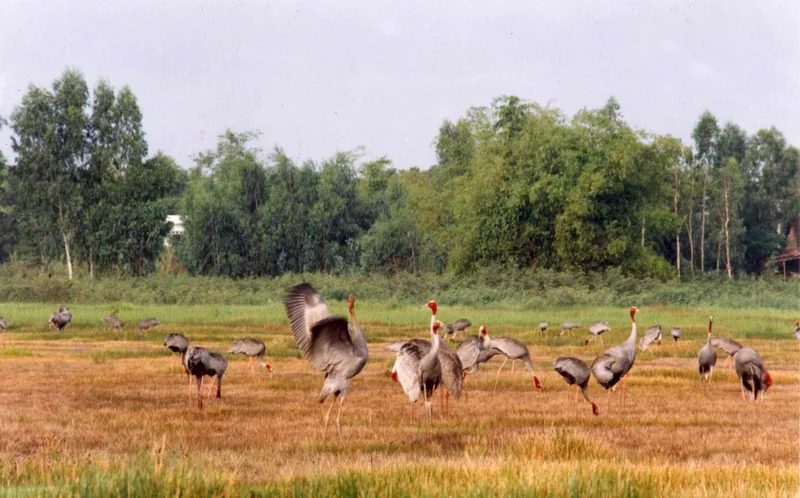
The habitats are seasonally flooded grassland, open swamp, and riverine melaleuca and mixed forest, which the Ramsar listing describes as a rare remaining sample of natural riverine forest in the Mekong Delta. Sources count between 142 and 148 bird species and 87 fish species, 27 of them found only in the lower Mekong. The species that draw birdwatchers are the sarus crane, listed as vulnerable, and the greater adjutant, listed as endangered.
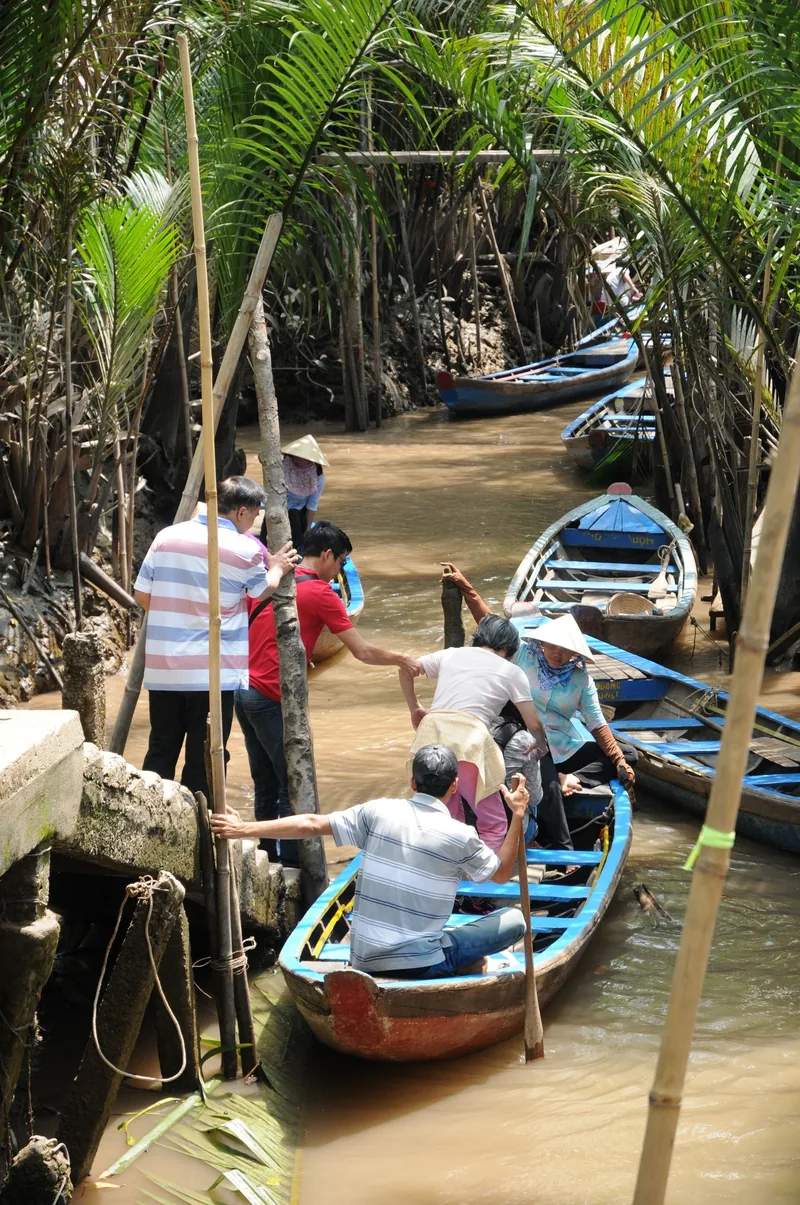
What a visitor actually does is quieter than those numbers suggest. You go out by motorboat along narrow canals to lotus lagoons and stretches of open marsh, watch birds lift off the fields, and walk or ride along paths under the melaleuca. There are displays of local animals and a staff tourism team, but this is a reserve, not a park with attractions.
Sources: Ramsar Sites Information Service — Lang Sen Wetland Reserve; Vietnam National Authority of Tourism — Lang Sen Wetland Reserve; Bao Tay Ninh — Lang Sen wetland, a miniature Plain of Reeds; VTV — Unique Lang Sen wetland reserve · last checked .
Where it is after the merger
The reserve covers parts of what were Vinh Loi, Vinh Chau A and Vinh Dai communes in Tan Hung district of Long An province. Since 1 July 2025 the district tier has gone and Long An is part of Tay Ninh, so the reserve is now in the far west of Tay Ninh province. We could not confirm the new commune names for the reserve area; maps and older signs still use the Tan Hung names, and they remain useful for directions.
Sources: Vietnam National Authority of Tourism — Lang Sen Wetland Reserve; National Assembly Resolution 202/2025/QH15, LuatVietnam English text; Bao Tay Ninh — Tay Ninh classified as a first-class provincial-level unit · last checked .
When to go: high water or high bird numbers
Planning sketch built from the sources below, not an official calendar. ● ideal · ◐ good · ○ poor.
The two goals pull in different directions. The national tourism authority recommends the flood season, from September to November, when the wetland is fully flooded and the lagoons and canals look their fullest. The Ramsar listing notes that more than 20,000 waterbirds are regularly recorded in the dry season, when water shrinks back to the core and birds concentrate.
The dry season also has a real downside. In 2016 a regional drought dried out the 200-hectare core of the reserve for the first time in decades; staff had to pump water around the clock to bring levels back to 50 centimetres, and the forest fire warning was raised to its highest level. In a dry year, the late dry season, March to April, can mean low water, shorter boat routes and fire restrictions.
Sources: Vietnam National Authority of Tourism — Lang Sen Wetland Reserve; Ramsar Sites Information Service — Lang Sen Wetland Reserve; Tuoi Tre News — Lang Sen core area dries up (2016) · last checked .
How long to stay
As a planning estimate, plan four to six hours on site: a boat trip of a couple of hours, a walk under the forest, lunch and time for birds in the late afternoon, when they return. Add the drive and this is a full day from Ho Chi Minh City, about 140 kilometres each way. From Tan An, the hub of the former Long An and now the provincial centre, it is about 90 kilometres.
Because of the distance, many visitors either sleep in Tan An the night before or fold Lang Sen into a longer Mekong Delta route. It does not combine well with Ba Den Mountain or the Holy See in a single day: they are at the other end of the province.
Sources: Bao Tay Ninh — Lang Sen wetland, a miniature Plain of Reeds; VTV — Unique Lang Sen wetland reserve · last checked .
Getting there
There is no simple public transport to the reserve. The usual approach is by car or hired driver from Ho Chi Minh City or Tan An, through rice fields and melaleuca country, then by motorboat along a canal into the reserve. Roads in the Plain of Reeds are narrow and slow, and UK travel advice notes that the Mekong Delta floods in October and November, when some roads may be affected. Check the route and the reserve's boat arrangements before setting out.
Sources: Bao Tay Ninh — Lang Sen wetland, a miniature Plain of Reeds; UK Foreign Office — Vietnam safety and security · last checked .
Costs
We could not find a current, published fee for entry or for boat trips. Ask the reserve when you arrange the visit, and agree the boat price and duration before you leave the jetty. A car with driver for the day from Ho Chi Minh City is the largest cost of the trip, and prices vary widely; get a written quote that includes waiting time.
Food is regional: the national tourism authority mentions fried catfish, snakehead grilled in a lotus leaf and sour fish soup with sesban flowers. Bring water, sun protection and insect repellent; dengue is present in Vietnam, according to UK health advice.
Sources: Vietnam National Authority of Tourism — Lang Sen Wetland Reserve; UK Foreign Office — Vietnam health · last checked .
Pictures



Who should skip it, and when not to go
- Visitors with a single day for the whole province who also want Ba Den and the Holy See. Choose one end.
- Anyone counting on seeing cranes. Sarus cranes are rare and their visits vary from year to year.
- The late dry season in a drought year, when water can be low and fire restrictions apply.
- Travellers without a car or driver; reaching the reserve by public transport is impractical.
For a wetland day closer to Ho Chi Minh City, many travellers choose the Mekong Delta proper instead. For the forest and lake in the north of the province, see Lo Go–Xa Mat and Dau Tieng.
Common questions
Questions readers ask
Is Lang Sen the same as Tram Chim?
No. Both are in the Plain of Reeds, but Tram Chim is a national park in a neighbouring province. Lang Sen is the reserve in the former Long An, now part of Tay Ninh.
When are the lotus flowers out?
The sources we checked do not give a flowering calendar. Lotus covers about 50 hectares of the reserve; ask the reserve when you arrange the visit.
Will I see sarus cranes?
Possibly, but do not count on it. The reserve lists them among its globally threatened species, and their numbers vary between years.
Can I visit Lang Sen as a day trip from Ho Chi Minh City?
Yes, by car, but it is about 140 kilometres each way. Leave early or sleep in Tan An the night before.
Related
Read next

Destinations · North Tay Ninh
Lo Go–Xa Mat and Dau Tieng
Lo Go–Xa Mat National Park and Dau Tieng Lake: what to expect, seasons, distances, costs and when to skip them.
Read more
Understand · The merger
The merger explained
What changed when Long An merged into Tay Ninh: the new capital, communes and wards, and old names to know.
Read more
Understand · Calendar
Festivals and seasons
Ba Den and Cao Dai festival dates, crowd peaks, the dry and rainy seasons, and how to time a visit.
Read more
Understand · Planning
Day trip or overnight
Hours needed for Ba Den, the Holy See, Lang Sen and the north, and when a day trip becomes an overnight.
Read more
Understand · Timing
When not to go
Festival peaks, holiday weekends, rain, low water and travel styles that make Tay Ninh a poor choice.
Read more
Destinations
Destinations
The main places in Tay Ninh province compared: hours needed, distance, season and who each suits.
Read moreStart planning
Send a correction or a question
Tell us which page you mean, what you found and when. A link to an official notice or a photo of a fare board helps us check it.